Furnishing a round coffee table can seem tricky, but with the right approach, it becomes a simple way to add style and function to your space.
The key is balancing visual interest with practicality, so your table looks inviting without feeling cluttered.
You’ll learn how to create a visually appealing setup using focal pieces, layers of different heights and textures, and strategic spacing.
Keep reading for practical ideas to make your round table both beautiful and functional.
Why a Triangle Layout Works on Round Coffee Tables
A triangle layout works on a round coffee table because it provides a clear, structured arrangement that complements the table’s curves. By anchoring three distinct points—one tall piece, one broad low piece, and a mid-height object—you create a balanced composition that naturally guides the eye around the surface. This setup prevents the arrangement from feeling scattered or flat, turning separate objects into a cohesive vignette. The triangular shape offers symmetry and visual flow without the rigidity of straight lines or corners, making the decor feel intentional yet open. Choosing objects of varying heights not only adds visual interest but also helps your eye move smoothly from one element to the next, ensuring the space feels dynamic but controlled. For this same reason, a mudroom can benefit from a storage bench bench that organizes items with clear structure and visual balance. For a similar sense of quality and performance in your seating area, consider how the structured yet flexible design of a well-chosen sectional sofa can anchor the room just as effectively. To achieve this same level of visual balance in your bedroom, selecting a dresser with high-quality drawer construction can ensure your storage remains both functional and attractive.
Start With One Bold Focal Piece on Your Coffee Table
Start with one bold focal piece on your coffee table. This hero object—like a ceramic sculpture or oversized bowl—serves as the visual anchor and reinforces the table’s round shape. Its prominence prevents clutter while maintaining functionality, making the arrangement appear intentional. Choose a focal material that contrasts with your table’s surface to create maximum impact. Options like stone, glass, or wood can stand out more effectively. Place it squarely in the center to emphasize the circular layout, leaving surrounding open space for daily use. Pair this with just a few subordinate items, such as a low stack of books, to keep the focal piece dominant. For a balanced look, consider a storage bench that offers both seating and hidden organization. Use a variety of materials to add visual richness, incorporating contrasting textures like stone, metal, and wood for depth and interest. Remember, restraint is key for a clean, deliberate look that balances style with practicality. For added versatility, consider positioning a loft bed nearby to free up floor space while maintaining a cohesive design. If your coffee table doubles as a seating area, consider placing a daybed with trundle nearby for flexible guest accommodations.
Layer Height and Texture on Your Coffee Table
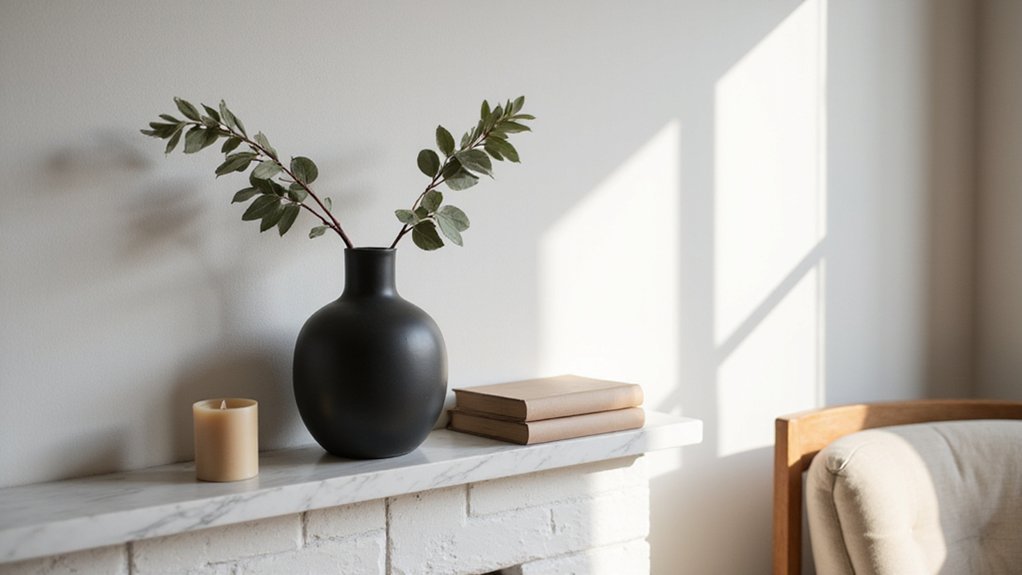
To create a balanced height hierarchy on your coffee table, use three distinct levels—tall, medium, and low. Start with a tall botanical stem around 8 to 12 inches high to serve as the focal point. Next, add a stack of two or three hardcover books for the mid-height layer. Finish with a low, flat base like a ceramic dish to complete the arrangement. This setup forms a visual triangle that naturally guides the eye without flattening the display. For additional storage and style inspiration, consider pairing your arrangement with a quality chest that matches your bedroom decor. Incorporate a layered vignette that echoes the principles used in fireplace mantel styling for a cohesive look. For a bedroom with a queen bed, ensure your coffee table frame is as sturdy as a quality bed frame to support these layered items.
Mix materials to add strong texture layering. Combine smooth ceramic or glass with rough stone or matte wood, and include a reflective element such as brass. Each level should feature a different tactile quality, which enhances visual interest. Remember to leave 30 to 40 percent of the surface empty. This negative space keeps your arrangement feeling intentional and breathable, preventing it from appearing crowded.
Why You Need a Tray on Your Coffee Table
A tray on your coffee table should cover about one-third to one-half of the surface. This size creates a balanced focal point without overwhelming the table or leaving too much open space for daily activities. Keeping it within this range allows you to organize small items neatly while still leaving room for drinks and other essentials. Limiting the tray to three to five objects helps your tabletop look polished and intentional rather than cluttered or overcrowded. Consider applying a smooth paint finish to the tray for a durable, flawless surface that complements your décor.
Match Your Decor to Your Coffee Table’s Finish
Matching your decor to your coffee table’s finish is essential for a cohesive look. For a wood-finished table, opt for decor in neutral or nature-inspired hues like greens, browns, or soft beiges; these colors enhance the warmth and natural feel. Incorporate material contrast with acrylic or metallic trays to prevent a uniform appearance, adding visual interest without overwhelming the space. Glass tables shine with brighter decor and fresh flowers, which bring color and life. Use a tray to anchor the objects and layer in wood, stone, or metal items for depth and texture. Metal-finished tables benefit from soft textures and varied heights—think vases, candles, and bowls—to reduce the reflective glare. Marble or stone surfaces should be kept minimal, with a single plant or a sculptural piece to avoid clutter. When working with mixed-material tables, create layered arrangements by echoing one finish while contrasting another, and stick to a rule of three objects for balance. Keep your arrangements light, intentional, and leave open space for functionality. For a similar approach under a loft bed, a compact writing surface can serve as a practical anchor that keeps the area organized and clutter-free. For brick fireplaces without a mantel, adding a wood mantel provides a similar warm, natural anchor that complements neutral and nature-inspired decor. When choosing a small table for tight spaces, checking standard bed frame width helps ensure a proper fit and prevents overcrowding in the room.
Style a Black, White, or Wood Table in Three Ways
To style a black, white, or wood round coffee table effectively, focus on accent choices that enhance each finish’s unique qualities. For a black table, prioritize color coordination by placing crisp white objects such as a vase and a stack of books on it. Incorporate a candle to create a striking contrast that keeps the surface visually interesting. Use matte, ceramic, or metallic finishes for accessories to introduce texture and reflect light, preventing the dark surface from feeling flat. Mixing heights and textures creates a cohesive look that draws the eye naturally. To safely rearrange heavy items, remember to lift from the base of each object to avoid damaging the table’s finish. A similar principle applies when selecting a frame for a twin bed to ensure stability and protect the mattress surface. For a long-lasting arrangement, consider implementing a weekly decluttering routine to keep the surface from accumulating stray objects.
For a white table, use black accents to add definition and prevent the surface from blending into the background. Position a sculptural object, a small plant, or a light-colored book stack to create visual interest without adding heaviness. Material mixing is key—combine natural textures like wood or woven fibers to soften the overall look and add depth.
On a wood table, contrast warm tones with metal, acrylic, or glass accents. For example, place a round metallic tray with a ceramic vase and greenery on top. This pairing balances warmth with shine, making the display more dynamic. Always vary the heights of clustered objects and arrange them centrally to form a stable, triangular composition that feels balanced and intentional.
Leave Room for Coffee, Books, and Remote Controls
Leave at least one-third of the round coffee table’s surface open to accommodate everyday essentials like mugs, books, and phones. Keep your accessories grouped in one central cluster to maintain surface clarity; spreading objects around the rim creates a crowded look and makes it harder to find what you need quickly. To avoid a chaotic appearance, ensure your central cluster connects visual flow by grouping items intentionally rather than placing them haphazardly around the edges. When you select pieces for this cluster, prioritize materials and textures that echo the quality and performance of your dining set to create a cohesive look across your living space. For additional storage without altering the table’s structure, you can add doors to a nearby Billy bookcase to conceal remotes and other small items. This approach mirrors the buffet table styling principle of grouping decor to maintain an uncluttered surface.
Use a lidded box or catchall to organize remotes and coasters. Keeping these items contained prevents clutter while still allowing easy access. Stack two to four coffee table books with the largest on the bottom to form a raised platform for decorative items like candles or small bowls without blocking functional space.
Place a round tray in the center to define your main zone. Position the tallest object slightly off-center to add a relaxed, unstructured feel. Stop adding items when you can no longer set down a drink without knocking something over or crowding the surface.
Start With These Budget-Friendly Decor Items
Using a budget-friendly tray to anchor your round coffee table adds style and organization without overspending. Opt for a rectangular rattan or wood tray if you want contrast and texture, or choose a metallic tray for a cohesive look. Both options help keep smaller decor pieces intentional and contained. Layer the tray with stacked large-format books and a lidded wooden box to add visual weight and create height variation. Incorporate thrifted vintage accessories like breadboards or platters for character and charm on a budget. Practice color coordination by grouping neutral-toned pillar candles with a small ceramic bud vase and faux stems, adding vertical interest. A small ceramic bud vase adds vertical interest without overwhelming the table. Finish the look with stone-look coasters or a cork set under $30 to introduce texture. For a subtle final touch, nest decorative matches in a glass jar—it’s a small detail that completes and polishes the vignette.
Swap Three Items Each Season to Keep Your Table Fresh
Swapping three key accent items each season is enough to keep your table’s look fresh and cohesive. Focus on textiles—switch velvet throws for linen or cotton fabrics suited to the current season. Then, rotate natural fillers: budding branches in spring, beach stones in summer, mini pumpkins in fall, and evergreens in winter. Lastly, update your art pieces, candles, or small decorative objects to reflect seasonal colors and themes. Consider using throw pillows to transform sofas and coordinate with the round coffee table for a unified room refresh.
This method creates distinct seasonal contrasts without disrupting your visual rhythm. Using the same tray as a base each time maintains decor consistency, preventing your table from feeling chaotic. Store off-season accessories in labeled bins, making seasonal swaps quick—often in just a few minutes. A simple formula: one base plus two accent changes — enough to keep your table functional, intentional, and inviting throughout the year.