Hosting a buffet can feel a bit overwhelming, especially when it comes to making it look inviting and stylish. The key is to keep things simple yet visually appealing.
Balancing different textures and colors without overcrowding is essential.
With a few easy styling tips, you’ll transform your table into a charming focal point.
Stay with me for all the details to create an effortlessly beautiful buffet setup.
Buffet Styling: Start With a Clean Slate
Begin by clearing the entire buffet area, removing all dishes, decor, and small objects. This creates a blank canvas that allows you to see the space with fresh eyes and truly assess its potential. Pay attention to table placement—make sure the buffet sits flush against the wall or stands independently to promote balanced flow throughout the space. Next, evaluate lighting—note how both natural and artificial light fall on the empty surface. This will influence your decorative choices and arrangement. Prioritize functionality by leaving ample open space for serving dishes. Opt for a few medium-sized decorative pieces rather than many small objects, as this prevents clutter. Keep frequently used items within easy reach, but maintain a tidy and intentional layout. Consider how to find the perfect fit by reviewing top-rated styles, just as you would when selecting a TV stand that matches your room’s dimensions and decor. For added inspiration, review the top sofa and table sets that combine quality with practical design. For a similarly balanced and sturdy foundation, you might look at queen bed frames that offer both durability and visual appeal. Your aim is to establish a calm, uncluttered foundation that supports both style and daily use.
Add Height for a Professional Buffet Look
Adding height to your buffet creates a professional and polished look. Use tiered serving pieces to add instant vertical layers, such as a three-tier tray, which handles desserts or appetizers without needing extra setup. These tiers break up the flat food line and double your serving capacity. If you prefer a custom look, you can even add doors to your Billy bookcase to conceal clutter behind a consistent facade. Secure stacked boxes with tape to prevent shifting during setup, ensuring the base structure remains stable. For a similar sturdy foundation, you can tighten the mechanism just like you would on a recliner sofa to prevent wobbling. Achieving a flawless result often requires sanding between coats for a smooth, professional finish.
Build risers from sturdy boxes or crates, wrapping them in fabric that matches your decor. Before your event, test each riser’s stability to ensure they can support the weight of the items you place on them—nothing ruins a presentation like a wobbling stand. Arrange your items with taller pieces toward the back, medium-height risers for mains, and low platters up front. This staggered layout creates a visual flow that draws the eye upward and keeps everything easily accessible.
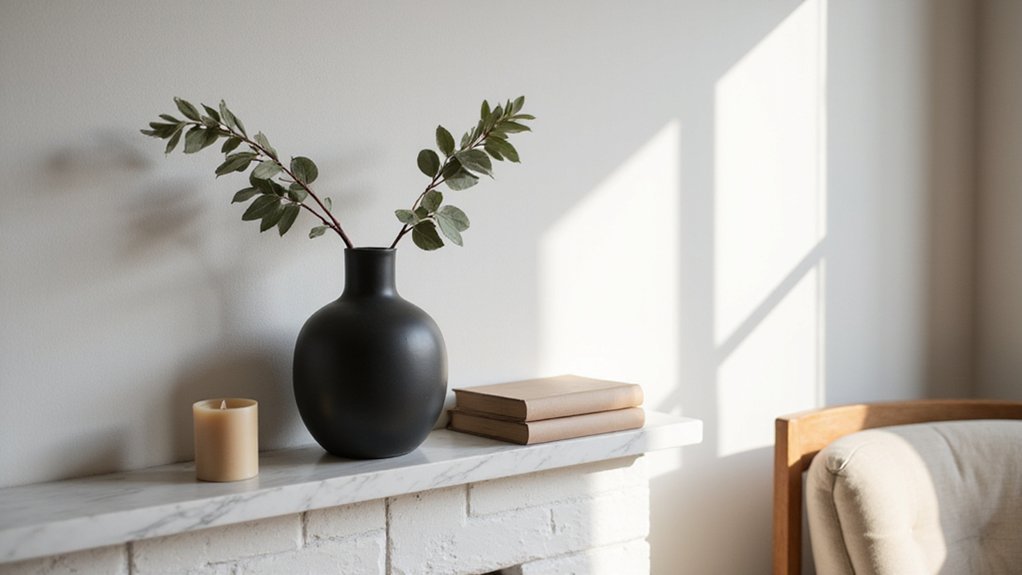
Finally, incorporate vertical decor such as tall floral arrangements or candles placed with enough distance from the serving area to avoid congestion. These elements add height and visual interest, making your buffet look more structured and intentional without overcrowding the tabletop.
Pick Just One or Two Colors
Choosing just one or two colors simplifies your presentation and creates a polished look. Using a limited palette helps achieve instant harmony, making your buffet appear intentional and well-coordinated. For a calm, cohesive feel, select two tones of the same color—like pale sage paired with deep forest green. When working with one dominant hue, using warm and cool versions together works best, but avoid letting these shades compete. Match your color choices to the season or your food to enhance visual appeal. Coordinate linens and napkins with your color palette to reinforce the theme. This restraint minimizes visual clutter and draws focus to your display. Clever lighting techniques can then highlight your chosen hues, casting a flattering glow that unifies the entire presentation without overwhelming it. For a longer-lasting display, consider pairing your color scheme with a daybed with trundle that offers both quality and value. For a similar approach in your entryway, a top console table provides the perfect surface to showcase your curated hues and accessories.
Mix Wood, Glass, and Linen for Depth
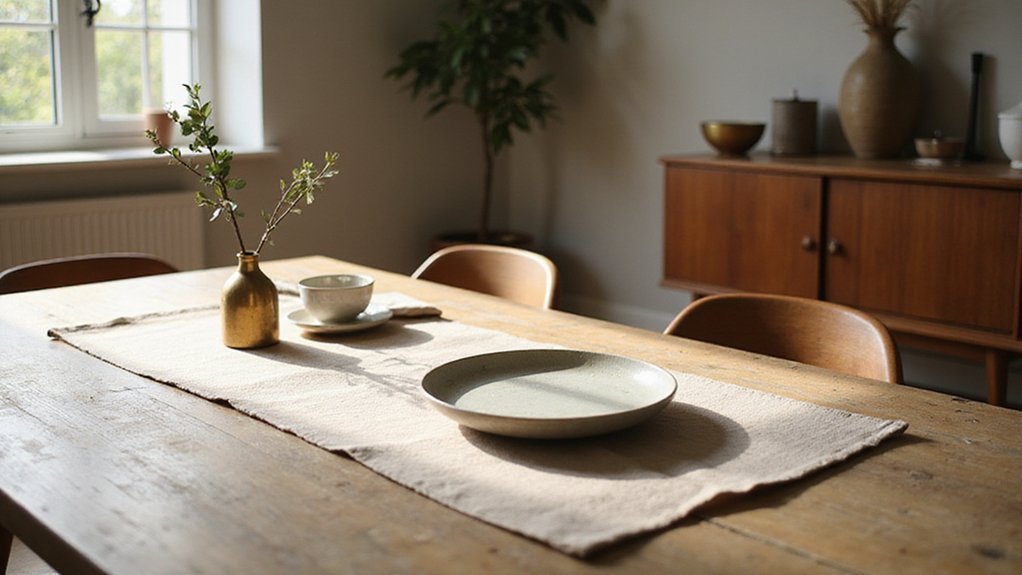
Combining natural wood, reflective glass, and soft linen creates a sense of depth by balancing different visual weights. Wood provides a warm foundation that prevents the display from feeling stark or clinical. Glass introduces brightness through its reflective surface, allowing candlelight to bounce and soften the heaviness of the wood. Linen acts as a tactile bridge, adding softness and a subtle texture that ties the entire arrangement together. Layering these materials—such as placing a dark wood base with clear glass hurricanes and creamy linen napkins—enhances dimension naturally. Ensuring space between each piece makes the material contrast deliberate, avoiding a cluttered appearance. Letting the wood show, glass catch the light, and linen soften edges collectively builds visual depth without adding clutter. You can also incorporate layering tips from TV console styling, such as placing a decorative tray under glass items to anchor the arrangement.
Use Tiered Stands to Make It Pop
Using tiered stands instantly adds vertical height to your buffet, creating a more dynamic and visually appealing display. These stands transform a flat, plain spread into a curated focal point that draws attention and encourages guests to explore your offerings. Because they elevate the presentation, you can fit more items—such as desserts, appetizers, or sliders—into the same table space without making it feel crowded.
Choose stands built from stable, sturdy materials like metal or porcelain to prevent tipping during service. Match the stand’s shape to your food items: bowl-style tiers work well for salads or dips, while flat, circular tiers suit pastries and finger foods. Coordinated finishes, like gold or silver, add an elegant touch and elevate your table’s overall look. Implementing height variation not only makes your display look intentional and polished but also makes it easier for guests to see and reach their favorite treats quickly. Always test the stability of your stands beforehand to keep everything secure during your event.
Style Food as Part of the Decoration
You can make your buffet table doubly decorative without adding clutter by styling the food itself. Use color contrast as your main tool—bright bell peppers, deep berries, and vibrant salads create a striking visual impact that no additional décor can match. Match your color palette to the event theme by layering shades within a single color family, such as navy to pale blue, which adds depth without creating fuss. Utilize tiered trays and stands to add height and dimension for items like finger sandwiches and fruit platters, elevating the presentation. Edible accents serve a dual purpose. Scatter fresh herbs to add texture, use citrus peels to introduce brightness, or incorporate edible flowers to turn a dish into a focal point. Select one hero dish for each stage of the presentation to anchor the visual flow, then support it with complementary sides. Fill gaps with fruit or foliage to give a sense of abundance, and keep platters neat to maintain an uncluttered look. When food itself becomes the decoration, your presentation appears both intentional and elegant.
Keep Linen Stable and Utensils Accessible
To keep linen stable and utensils accessible, start by adding a non-slip layer under your cloth to grip smooth surfaces and prevent movement. Space tablecloth clips evenly around the edge and tighten them snugly to secure the fabric. Place practical weights, such as plates or chargers, evenly across the table to anchor everything without disrupting your design. For utensil organization, position serving dishes first to avoid blocking the main flow, then tuck utensils near the front or side edges for easy access. Ensuring the linen is smoothed from the center outward creates an even overhang, keeping the entire setup neat and frustration-free. For a buffet setup, balancing functionality with style is similar to how dual power recliners integrate comfort and convenience. A dining table set for six often provides a balanced footprint that helps anchor both the linen and serving pieces. Consider the overall table dimensions and materials to ensure your buffet layout balances visual weight with practical stability, just as you would when selecting a coffee table for a living space.
Update the Look With Seasonal Natural Elements
Incorporating seasonal natural elements instantly refreshes your buffet table, making it feel intentional without the need for elaborate decor. Replace synthetic props with seasonal floral arrangements like tulips in spring or mums in autumn, placed in simple vessels to anchor the display. Adding natural greenery accents such as eucalyptus sprigs or ivy vines introduces texture and movement throughout the setup. You can also pile bowls with citrus fruits for summer or apples for fall to add vibrant color and interesting shapes. Using wooden boards and bark runners helps ground the look with earthy warmth, creating a beautiful contrast to the soft greenery. For those who frequently transform their spaces, a convertible bed sofa offers versatile seating and sleeping in one piece, blending high performance with seasonal style. By mixing these natural textures—flowers, leaves, fruit, and wood—you can effortlessly update your buffet each season, maintaining a cohesive and organic aesthetic. Scatter items like pumpkins, pine cones, and acorns across the table for added depth, using a bark runner to unify the rustic display. For a more structured backdrop, consider styling the display against a sideboard with cabinets to keep extra linens and serveware neatly tucked away while showcasing the seasonal arrangement. For a timeless foundation that combines durability with aesthetics, look for a chest of drawers built with solid wood construction to anchor the entire space.