Struggling to make your glass coffee table look stylish without it feeling cluttered or bland? The key is creating a balanced display that feels both curated and effortless.
With simple strategies around size, height variation, and material mix, you can transform your table into a chic focal point. Keep reading to discover how easy styling can elevate your space.
Start With a Tray to Anchor the Look
Start with a tray that covers about one-quarter to one-third of your tabletop. This size strikes the right balance by creating a defined zone without overwhelming the surface or inhibiting use. Choose materials that complement your style: warm options like wood or woven textures add coziness, while matte metal or stone provide subtle contrast. Make sure the tray has a smooth bottom to protect the glass surface from scratches. For a similar approach to maximizing surface utility, consider how a trundle daybed optimizes space with its pull-out design. Selecting a tray with built-in storage can also help keep small items organized and out of sight.
Limit your arrangement to three to five objects. Include one tall piece, such as a vase or sculpture, paired with a low accent like a small dish or candle holder. Add something functional, like coasters, for practicality. Keep open space around the objects to ensure the tray does not look crowded. These neutral trays offer versatility for seasonal decor updates without replacement, as they provide a timeless foundation for your styling. A well-chosen tray can be repainted to match new decor, much like preparing a dresser surface for a fresh coat. This avoids clutter and keeps your surface practical for entertaining or everyday use.
Vary Heights by 4 to 6 Inches for Visual Rhythm
Vary your object heights by 4 to 6 inches to create visual rhythm. After anchoring your tray arrangement, introduce a mix of tall, medium, and low items with this height contrast. The tallest piece should be between 12 and 18 inches, and the shortest should be broad, like stacked books or low bowls. Place the tallest element off-center and use intermediate height pieces to bridge the gap. This variation prevents the display from looking flat or one-dimensional, guiding the eye naturally across your table. On glass surfaces, staggered heights also help minimize reflections and clutter, keeping the arrangement crisp. Remember to leave 30 to 40 percent of space empty—this makes the height differences stand out and adds visual interest. To further enhance the composition, incorporate contrasting materials such as metal, wood, and glass for added richness and depth. Just as with a mudroom bench, consider the standard depth range of 14 to 18 inches to ensure your styling proportions feel grounded and intentional on the tabletop. When layering objects, ensure your tallest piece does not exceed 38 inches in height, as that is the common maximum for twin bed frames to maintain proportional balance in the room. For a well-rounded look, draw inspiration from the best queen bed frames that balance sturdy construction with clean lines to anchor your arrangement.
Mix Wood, Metal, and Ceramic for a Balanced Look
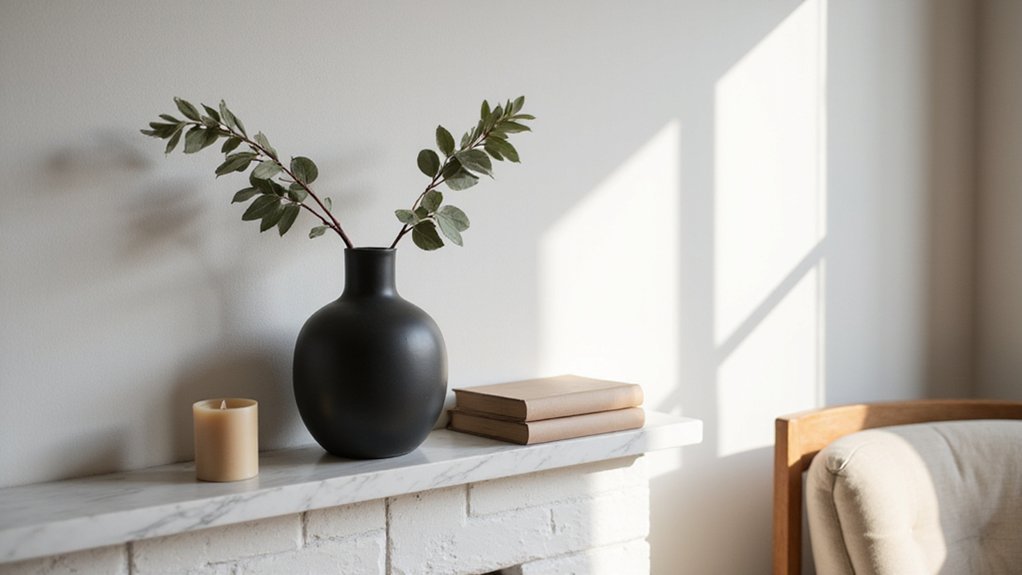
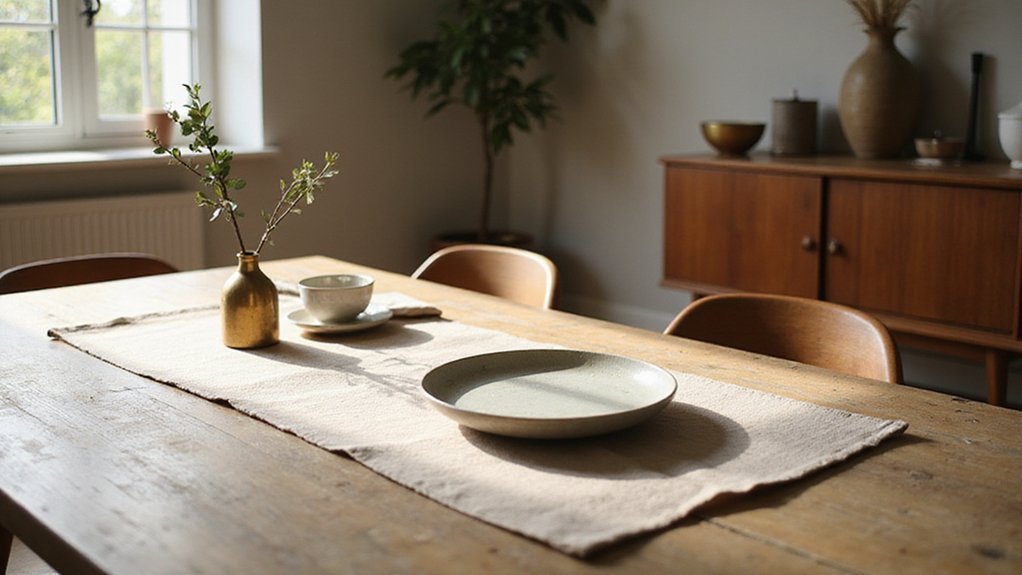
To style a glass coffee table with a balanced, collected look, you should incorporate materials like wood, metal, and ceramic in a deliberate way. Start with wood as your grounding element—placing a walnut tray or a teak book stack adds warmth and tactile contrast, making the setup feel stable rather than sparse. Next, introduce metal for structure and shine. Brass candlesticks or a chrome tray add a reflective touch that lifts the overall composition, but use these accents sparingly to avoid creating a cold or sterile vibe. Finally, add ceramic pieces such as a matte vase or bowl to soften the look. The matte finish introduces texture and visual interest, contrasting with the sleek glass and shiny metal. For selecting furniture with similar attention to detail, checking quality reviews is essential. When layering these elements, consider that the best products often combine durable materials for long-lasting performance. This combination of rough, shiny, and matte finishes creates visual harmony. Maintain a consistent color palette—warm metals generally pair better with darker woods—to ensure the materials feel intentional. Using a tray to contain and organize the elements helps keep the display cohesive and prevents clutter from disrupting the aesthetic. For a bedroom with similar storage needs, a queen bed frame can offer both style and functionality.
Add Greenery to Warm Up Your Glass Coffee Table
Adding small-scale greenery is an effective way to warm up a glass coffee table. Opt for compact plants like ferns or succulents, which complement the light, transparent surface without overwhelming it. Choose planters made of ceramic or woven materials to introduce organic texture, balancing the reflective glass. Arranging plants of varying heights, such as a taller fern next to a low succulent, guides the eye across the surface and creates visual interest. Stick to soft green shades paired with neutral containers for a cohesive, grounded look. Just a few petite plants can soften the overall aesthetic, making your glass table inviting and warm without feeling crowded. For optimal lighting, ensure your vanity lights are wider than your mirror to reduce shadows on your face. Low-maintenance plants like snake plants and pothos are ideal for beginners. For those seeking a more grounded storage option, a platform bed offers a solid foundation that complements the airy lightness of glass. Similarly, selecting a top-rated vanity mirror with integrated lighting can help you check your grooming details under optimal illumination.
Choose One Focal Point to Avoid Clutter
Choose one focal point to avoid clutter. Limit your arrangement to 3 to 5 objects, including a tray, so the display remains curated rather than crowded. Use low-profile supporting pieces like coasters, small bowls, or decorative boxes that frame your main item without competing for attention. Vary heights around the focal point to naturally guide the eye and create visual interest. Leave intentional breathing room around your centerpiece to emphasize its importance. On glass surfaces, clutter tends to stand out more, so let your focal object shine while keeping everything else secondary. If your table wobbles, fixing the base first ensures your display stays stable. You can also check that the recliner mechanism is not damaged if your sofa shares a similar structural issue. For a more durable and versatile display, consider choosing a bunk bed with desk that offers integrated storage and a sturdy frame.
Stack Coffee Table Books as a Middle Layer
Stacking 2 to 4 coffee table books creates a balanced middle layer that adds depth to your display. Aim for three books, as this number strikes the right visual weight for most surfaces. Always build from the largest to the smallest book for stability, forming a rough triangle that grounds the display. This approach ensures the stack doesn’t tip over and looks intentionally styled.
Color coordination is key; select books with a shared theme like travel or art to keep the look cohesive. Sticking to a single color family or neutral gradients prevents visual chaos. Hardcover books tend to be more polished—consider removing dust jackets if their covers clash with your overall palette. Finish the stack with a small accessory such as a candle or a ceramic bowl. This keeps the look clean and prevents clutter, elevating your glass table with simple elegance. For those who also prioritize comfort, consider pairing this setup with an adjustable bed frame for a cohesive relaxation space.
Store Remotes in a Decorative Box, Not on the Glass
Storing your remotes in a decorative box is the best way to keep your glass table looking clean and stylish. Instead of leaving them loose on the surface, tuck them inside a box made of wood, matte metal, or ceramic. Placing the box on a tray alongside coasters or a candle creates an intentional, layered look while preserving negative space. This hidden storage keeps your remotes organized and prevents scattered electronics from disrupting the clean, transparent appearance of your table. Plus, it helps protect your remotes from scratches and reduces dust accumulation. Positioning the box visibly, rather than hidden away, encourages regular use and easy access, maintaining a clutter-free, polished centerpiece. To ensure the table remains the focal point, consider how its dimensions compare to your room’s layout, just as you would with a queen bed frame to avoid overwhelming the space. This same principle of balance applies when selecting the box’s material, as a chaise lounge style often uses a similar approach to harmonize with surrounding furniture. To ensure the mirror stays secure, always use a wall anchor appropriate for the weight of the hanging hardware.
Let the Glass Breathe With Negative Space
Leaving 30 to 40 percent of your glass coffee table’s surface empty is key to creating a balanced, modern look. This negative space isn’t wasted; it allows the glass to become a design feature, emphasizing transparency and simplicity. Filling every inch can make the surface feel crowded and heavy, while intentional empty areas provide visual relief and open up the space.
Stick to Three to Five Objects on a Glass Coffee Table
Limit your coffee table arrangement to three to five objects, including a tray. This small number helps prevent a cluttered appearance, especially since glass surfaces tend to magnify visual noise. Use one tray as your anchor and count it as one object. Build your display with a few coordinated categories, such as a tall vase, a stack of books, and a small plant. Vary the height and scale of each piece, leaving a 4 to 6 inch gap between the tallest and shortest items to create visual balance. Incorporate color coordination to unify the objects, and consider mixing patterns on book covers or ceramics for subtle visual interest. Adding materials like wood, metal, or stone can introduce warmth and texture against the glass surface. For extra seating and lounging flexibility, consider pairing this setup with a best couch that includes a chaise lounge. Maintaining this limited number ensures your arrangement feels intentional and thoughtfully curated rather than accidental or chaotic.
Why Less Is More When Styling a Glass Tabletop
Because glass tabletops create a sense of visual lightness, less is more when it comes to styling them. Instead of filling every inch with objects, embrace negative space to let the rug and floor finish show through. This approach makes the table appear airy and seamlessly integrated into the room. Keeping the arrangement minimal allows each piece to stand out with purpose, avoiding competition with the room’s existing patterns and textures. Select a few well-chosen items, such as a sculptural accent or a small stack of books, to add personality without overwhelming the transparent surface. Scale is important; oversized objects can disrupt the sense of lightness, so opt for smaller, carefully curated pieces that leave breathing room. You can also incorporate natural elements like fresh flowers in a simple glass vase to introduce freshness and a natural feel without cluttering the surface. Ultimately, a restrained styling preserves the table’s sleek, modern character and helps your space feel larger, more cohesive, and thoughtfully designed.