Picture yourself sinking into plush cushions, a cold drink in the cup holder, and a charging port for your phone within arm’s reach. That’s the lazy luxury these nine sofas deliver. But not all recliners are created equal, and you need to know which features actually work for your space before you click “buy.”
Jocisland 78″ Power Reclining Sofa, Dark Gray
https://m.media-amazon.com/images/I/919U8XZ6IfL._AC_SX679_.jpg
The Jocisland 78” Power Reclining Sofa in Dark Gray is our editor’s choice for anyone craving cinematic comfort without the bulk. You get a sleek, rectangular silhouette with a dual wingback design, all wrapped in textured microfibre fabric. It’s not just a looker, though.
- Recline with ease. One-touch controls let you smoothly adjust up to 160 degrees. Perfect for reading, watching TV, or napping.
- All-day support. Thick high-density foam cushions, a zoned backrest, and padded armrests keep you comfortable for hours.
- Smart storage and fit. Side pockets hold remotes or books. It’s space-saving yet seats three, supporting up to 900 pounds.
Assembly takes two people about an hour. Just wipe clean with a damp cloth to maintain that plush finish. It’s a practical, cozy upgrade for your living room, bedroom, or even a meeting space.
Factors to Consider When Choosing a Sofa With Recliner
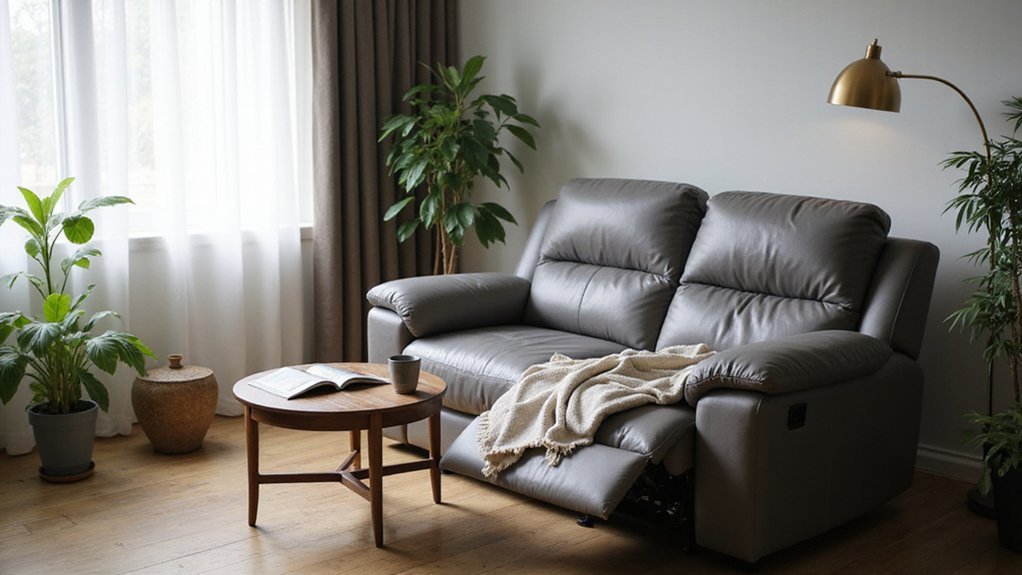
You’ll first want to measure your room, because a recliner needs clearance behind it to fully recline without hitting the wall. Seating capacity is next: consider whether a two-seater, three-seater, or sectional fits your household size and daily lounging habits. Then, think about the recline mechanism—manual levers cost less but can require more effort, while power recliners offer push-button ease and often include USB ports.
Space Requirements
One key factor you can’t afford to overlook is space requirements. Measure your room’s length, width, and height first, then match the sofa’s dimensions to those numbers. Don’t forget clearance for the recline mechanism: it typically needs 12 to 18 inches from the wall to fully extend without scraping drywall. That’s non-negotiable, unless you enjoy a permanent half-reclined position.
Also, map out extra space around the sofa so it doesn’t crowd doorways or coffee tables. And consider the shape: an L-shape or modular design can hug corners better than a straight three-seater, maximizing what you’ve got. Short on square footage? A wall-hugger model saves you precious inches. Just measure twice, buy once, and you’ll keep that lazy vibe intact!
Seating Capacity
Start with a hard number: 2, 3, 4, or even 5, because that’s how many butts you need to park without someone ending up on the floor. For families or frequent hosts, don’t settle for a two-seater. You’ll want a three-seat or larger model that packs recliner features into every position. Measure your room first, though. A massive five-seater can overcrowd a cozy space, turning luxury into a squeeze. Remember, those recliners eat floor space when fully extended, shrinking your effective seating area. Balance capacity with plush cushions and adjustable positions, so everyone lounges without playing footsie. A four-seater with two recliners often hits the sweet spot: enough room for guests, still comfy for daily naps. Just count your crew before you commit.
Recline Mechanism Type
Before you sink into that perfect recline, decide how much effort you’re willing to put into getting there. You’ve got two main options: manual or power. Manual recliners use a simple lever or tab. They’re more affordable, simpler to operate, and low maintenance since there are no electrical components to worry about. But if you want effortless adjustments, go with power. An electric motor handles the work, letting you find precise positions with the push of a button. Plus, you might get extras like memory settings and adjustable headrests. Powered mechanisms offer smoother, quieter reclining. Just keep in mind that more electronics mean potential repair needs down the road. So, weigh cost and convenience. Your choice sets the tone for every lazy afternoon ahead!
Upholstery Material
Since your sofa’s fabric will take the brunt of daily lounging, marathon movie sessions, and maybe the occasional pet snooze, choosing the right upholstery material is a big deal. For cooler comfort during those long sits, grab something breathable. Microfiber or textile fabrics promote airflow, so you won’t wake up sticky. They’re also tough, resisting pet hair and snagging like a champ.
Leather offers that luxurious feel and wipes clean easily. But watch out: it’s less breathable and can scratch if you’ve got claws or kids. Whatever you pick, pair it with high-density foam cushions. That combo gives you both solid support and serious plushness. Just match your material to your lifestyle. You’ll thank yourself later.
Storage Features
Why does storage matter so much when you’re picking out a reclining sofa? Because the whole point is kicking back without getting up! You want the remote, your phone, a magazine—all within arm’s reach. So, look for side or front pockets to stash these small items. Built-in cup holders add convenience, preventing spills while you relax.
You’ll also find storage compartments underneath the seating or integrated into armrests, maximizing space and reducing clutter. Some models even include pull-down tables or consoles with USB ports for extra functionality. And don’t forget practicality: choose removable, washable cushions and covers. This simplifies cleaning, especially when crumbs sneak into those storage nooks. A little planning now keeps your laziness zone tidy later!
Weight Capacity
Two key factors determine whether a recliner sofa will truly support your relaxation: the weight capacity. This number, usually between 300 and 900 pounds, tells you the maximum load your sofa can safely handle. Don’t ignore it. Choosing a capacity too low for your household risks structural damage or, worse, a collapse over time.
You’ll want to match the manufacturer’s specified limit to your actual use. Are you a heavier individual, or do you often have multiple people lounging? Then aim higher, toward that 900 pound range. A lower capacity works fine for lighter, single users. Just verify the numbers before you buy. It’s a simple step that guarantees durability and keeps your lazy days safe. Because nothing kills relaxation faster than a broken frame!
Assembly Needs
How much effort are you willing to put in before you actually get to recline? Some sofas arrive fully assembled; others demand a weekend project. Check the box: does it require full assembly, partial setup, or none at all? You’ll want to know if complex steps, tools, or cryptic instructions are involved. And honestly, who wants to hunt for a screwdriver they don’t own? Look for models with tool-free assembly or those that include everything in the box.
- Full assembly: multiple parts to connect, expect 45-90 minutes.
- Partial setup: just attach legs or backrests, usually under 30 minutes.
- No assembly: unbox and go.
Skim customer reviews for real talk on the process. Some recliners click together like child’s play; others test your patience. Choose wisely, so your laziness isn’t delayed by a wrench.